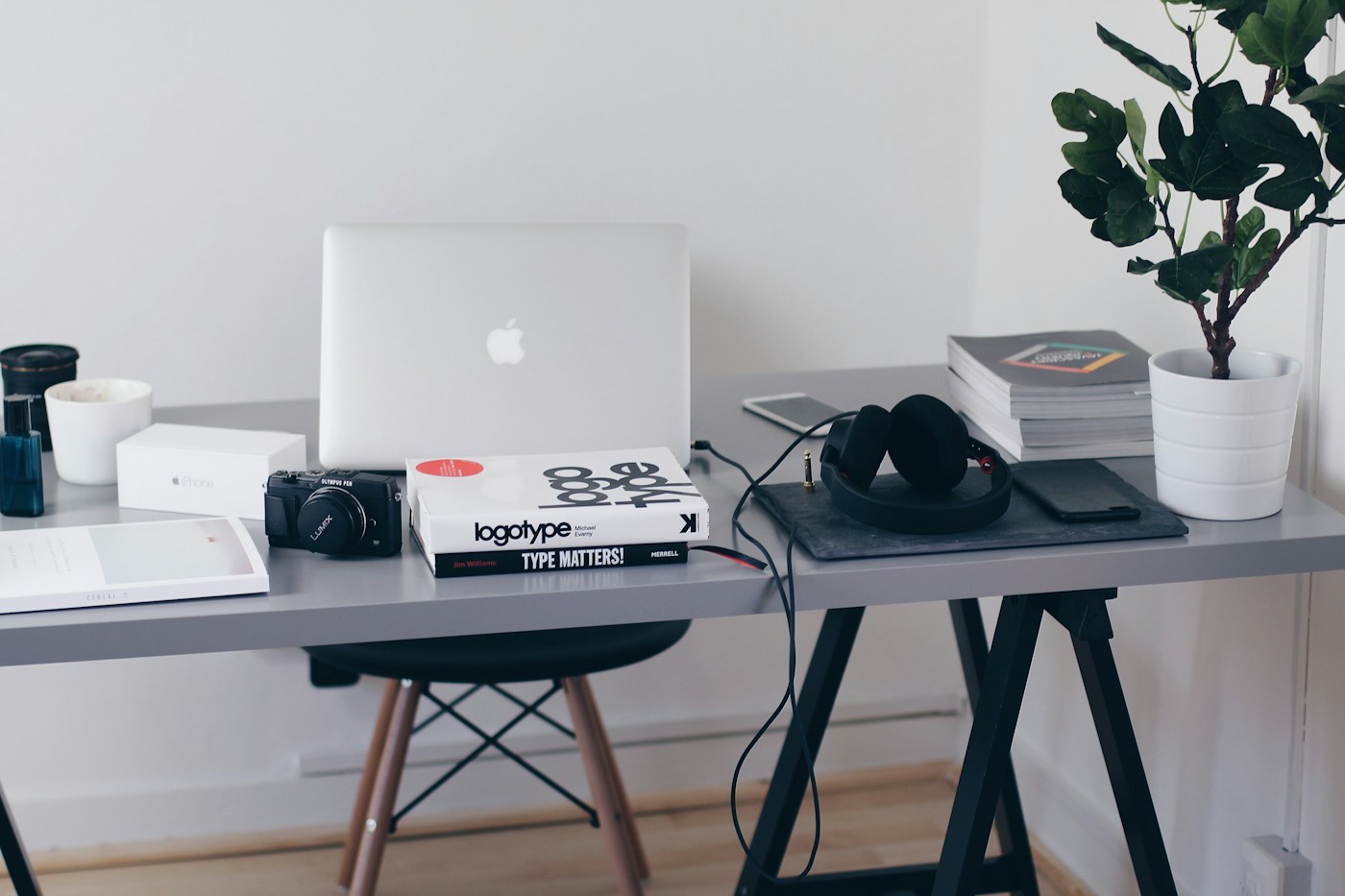
A calm workspace is not necessarily an empty one. It can hold books, notes, a plant, and the evidence of something in progress. What matters is whether those things help you begin. Making space for attention is less about achieving a perfect desk and more about removing a little friction from your day.
Start with what you use
Begin with one practical question: what do I reach for when I sit down to work? Put those things within easy reach. Give the rest a place nearby. You are arranging a working environment, not composing a photograph.
Leave enough clear surface for the task in front of you. A notebook, a drawing, or a book may need more room than your laptop. Let the space change with your work rather than expecting every day to look the same.
The useful workspace is the one that makes the next good step a little easier.
Make some digital space
A browser can become crowded as quickly as a desk. Close the tabs you no longer need, move reference material into a folder, and keep the current task easy to find. When every window competes for attention, even starting can feel complicated.
If your work allows it, choose a short period to mute nonessential notifications. Tell the people who need to reach you how to do so. The aim is a clear boundary that supports the task, with enough flexibility for the real demands of your day.
Find a rhythm you can keep
A useful routine is one you can repeat without much negotiation. Write down the next step before you finish a session. Take a short break between tasks. Open the document you need before the inbox that might redirect your morning.
Small arrangements will not solve every challenge in a working day. They can, however, make the next useful action easier. Start there, notice what helps, and adjust the space as your needs change.
From the concept edition of The Daily Brief. This is an original sample essay, rather than a live news report.