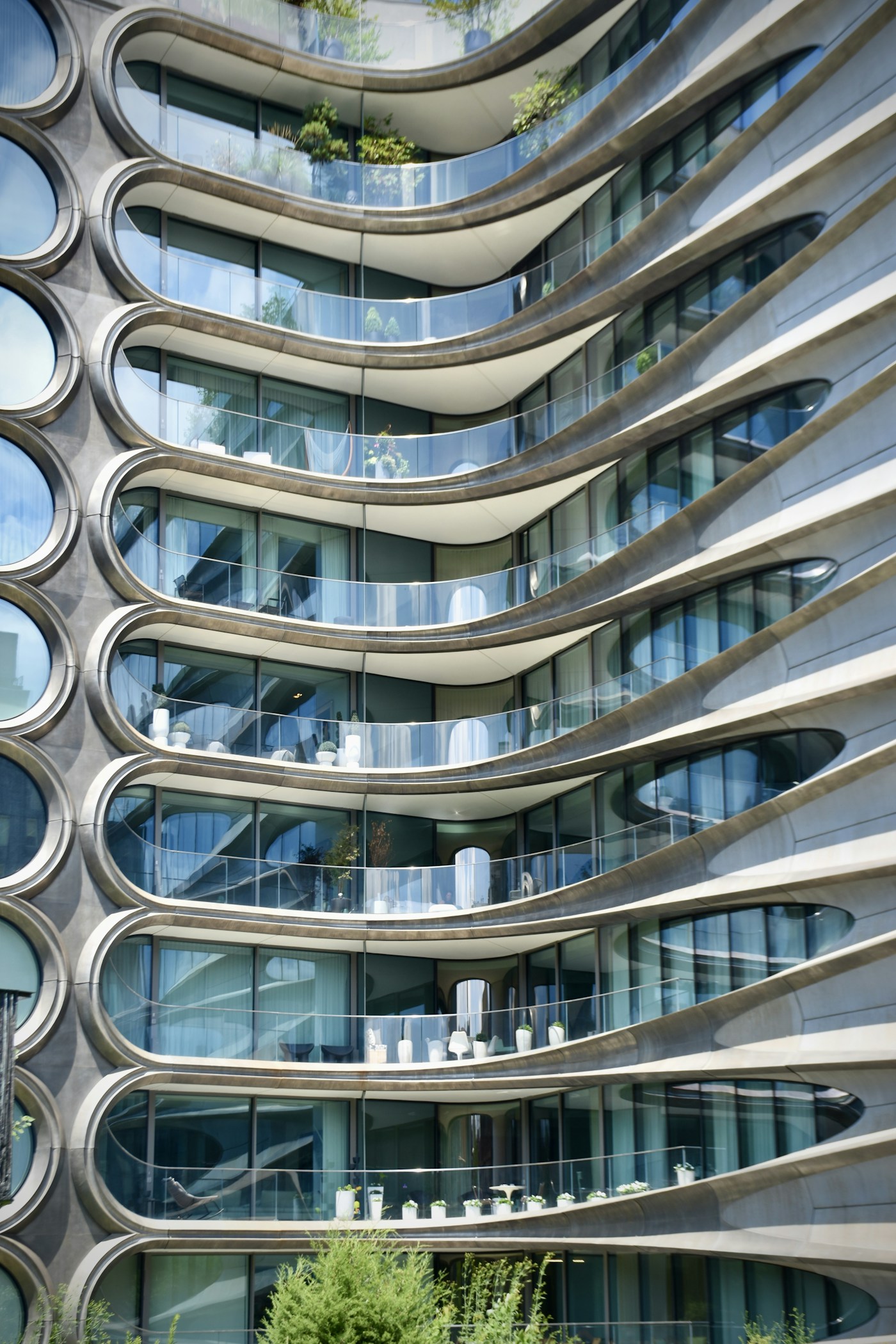
Most buildings enter our lives at walking speed. We encounter a doorway before a skyline, a patch of shade before a dramatic silhouette. The architecture that stays with us often does something simple well: it offers a reason to pause, look up, and notice the street around us.
Start at street level
A photograph can show an entire building at once. Walking past it tells a different story. Is the entrance easy to find? Does the ground floor have something to offer the pavement? Does the edge of the building feel welcoming? These questions connect the design to everyday experience.
A sheltered doorway, a clear threshold, or a window that brings activity to the street can matter as much as an impressive façade. The building becomes part of the neighborhood through the moments where people meet it.
A building becomes part of a city through the everyday moments where people meet it.
Notice light and shape
A curved balcony catches light differently from a flat wall. Repeated windows give a façade rhythm. Deep openings can make shadows that change throughout the day. Look again in the morning or late afternoon and the same building may seem almost unfamiliar.
These details offer an accessible way into architecture. You do not need specialist vocabulary to notice how a surface feels, where the light falls, or which parts of a street make you want to linger.
From the concept edition of The Daily Brief. This is an original sample essay, rather than a live news report.